Skip to content

Blazing Star Environmental

Empowering Henvey Inlet First Nation Youth to Lead the Long-term Monitoring and Artificial Habitat Restoration of At-Risk Reptiles on HIFN Lands

Massasauga (Sistrurus catenatus), Spotted Turtle (Clemmys guttata), Blanding’s Turtle (Emydoidea blandingii), Eastern Foxsnake (Pantherophis gloydi), Eastern Hog-nosed Snake (Heterodon platirhinos), and Eastern Musk Turtle (Sternotherus odoratus)

blazing star environmental logo

Project Details

Project Title: Empowering Henvey Inlet First Nation Youth to Lead the Long-term Monitoring and Artificial Habitat Restoration of At-Risk Reptiles on HIFN Lands
Funding Recipient: Blazing Star Environmental
Funding Awarded: $468,889 over the next 3 years ($148,889 in 2024, $171,111 in 2025 and $148,889 in 2026)
Project Partner: Henvey Inlet First Nation, McMaster University and Laurentian University
Targeted Species at Risk: Massasauga (Sistrurus catenatus), Spotted Turtle (Clemmys guttata), Blanding’s Turtle (Emydoidea blandingii), Eastern Foxsnake (Pantherophis gloydi), Eastern Hog-nosed Snake (Heterodon platirhinos), and Eastern Musk Turtle (Sternotherus odoratus). The primary monitoring focus is on Massasauga, Spotted Turtle and Blanding’s Turtle, while the remaining three species are monitored as secondary targets.
Project Status: Ongoing (2024-2026)

Project Description

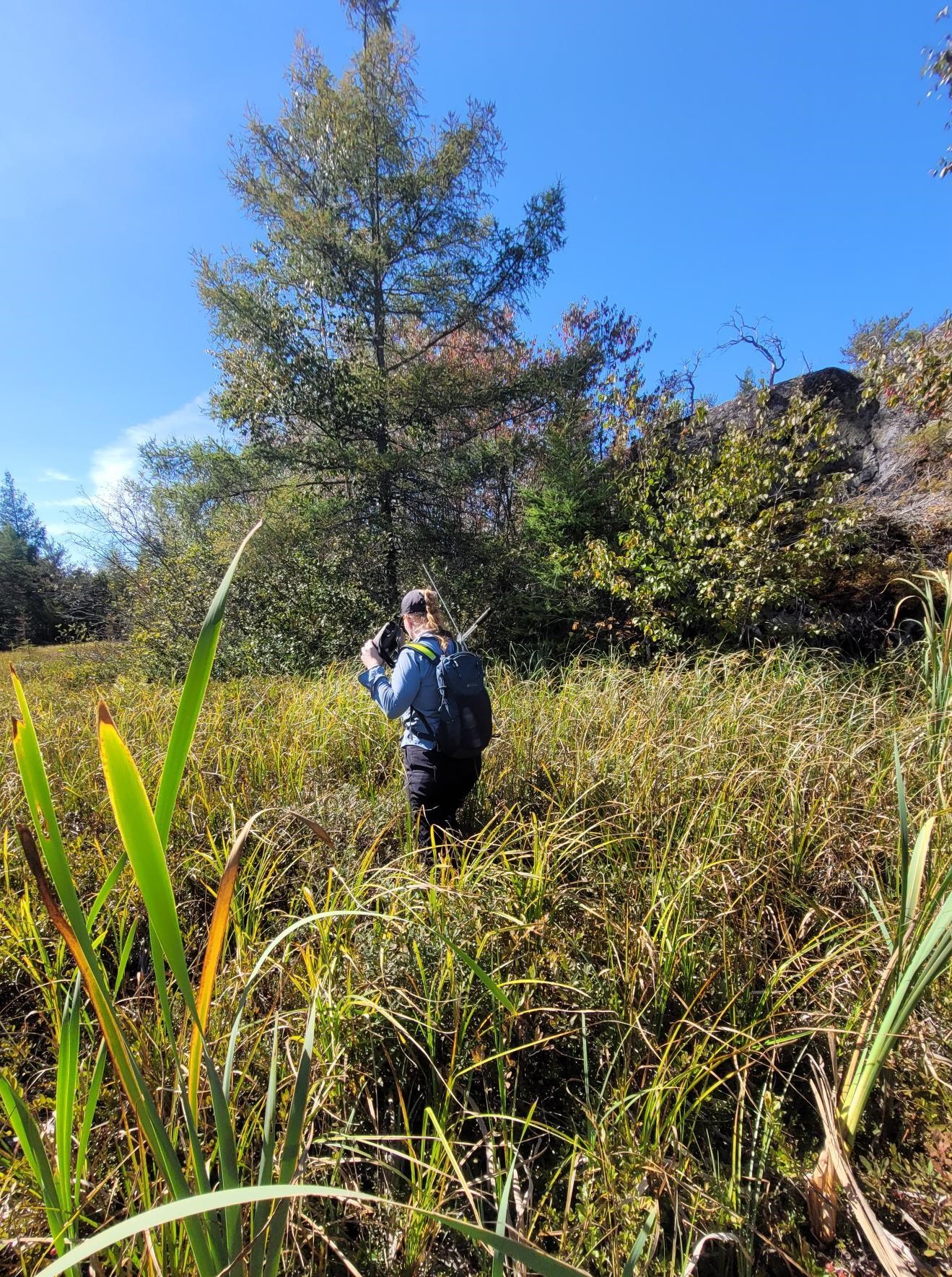
Since 2019, Blazing Star Environmental has partnered with Henvey Inlet First Nation (HIFN), Laurentian University, and McMaster University on a long-term monitoring program examining how SAR reptiles on HIFN Reserve #2 are responding to the 2018 forest fire, the construction and operation of the Henvey Inlet Wind Energy Centre, and climate change. The program blends western science with a two-eyed seeing approach and aims to build lasting capacity within the HIFN community to eventually lead the project’s implementation and management.

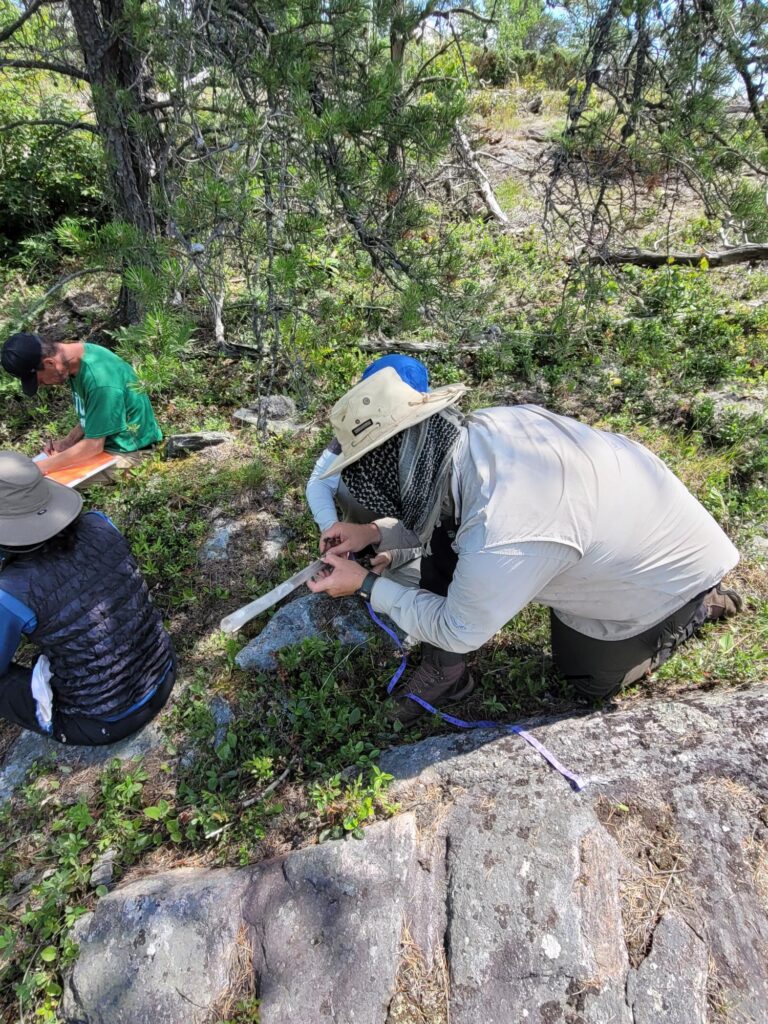
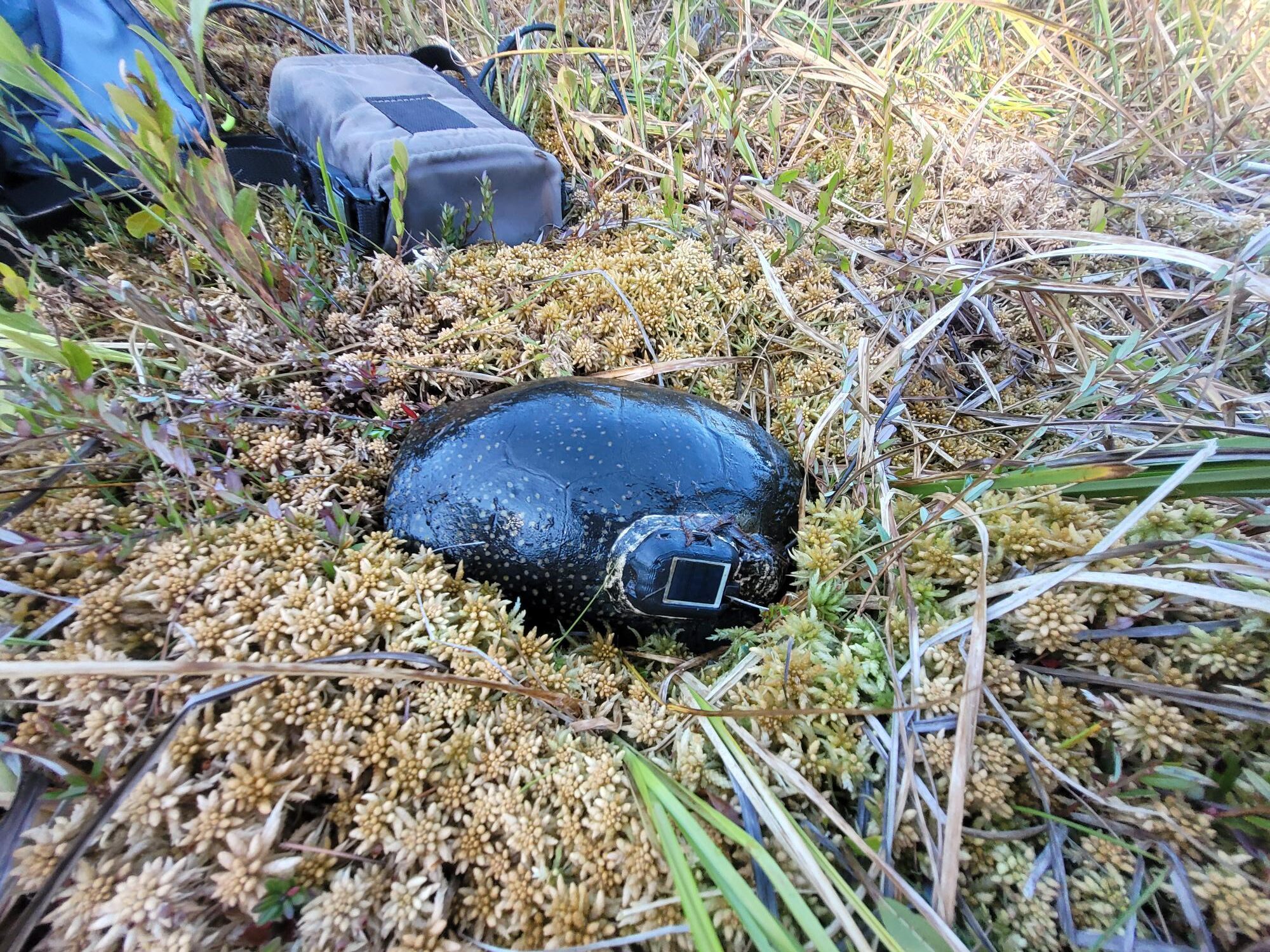
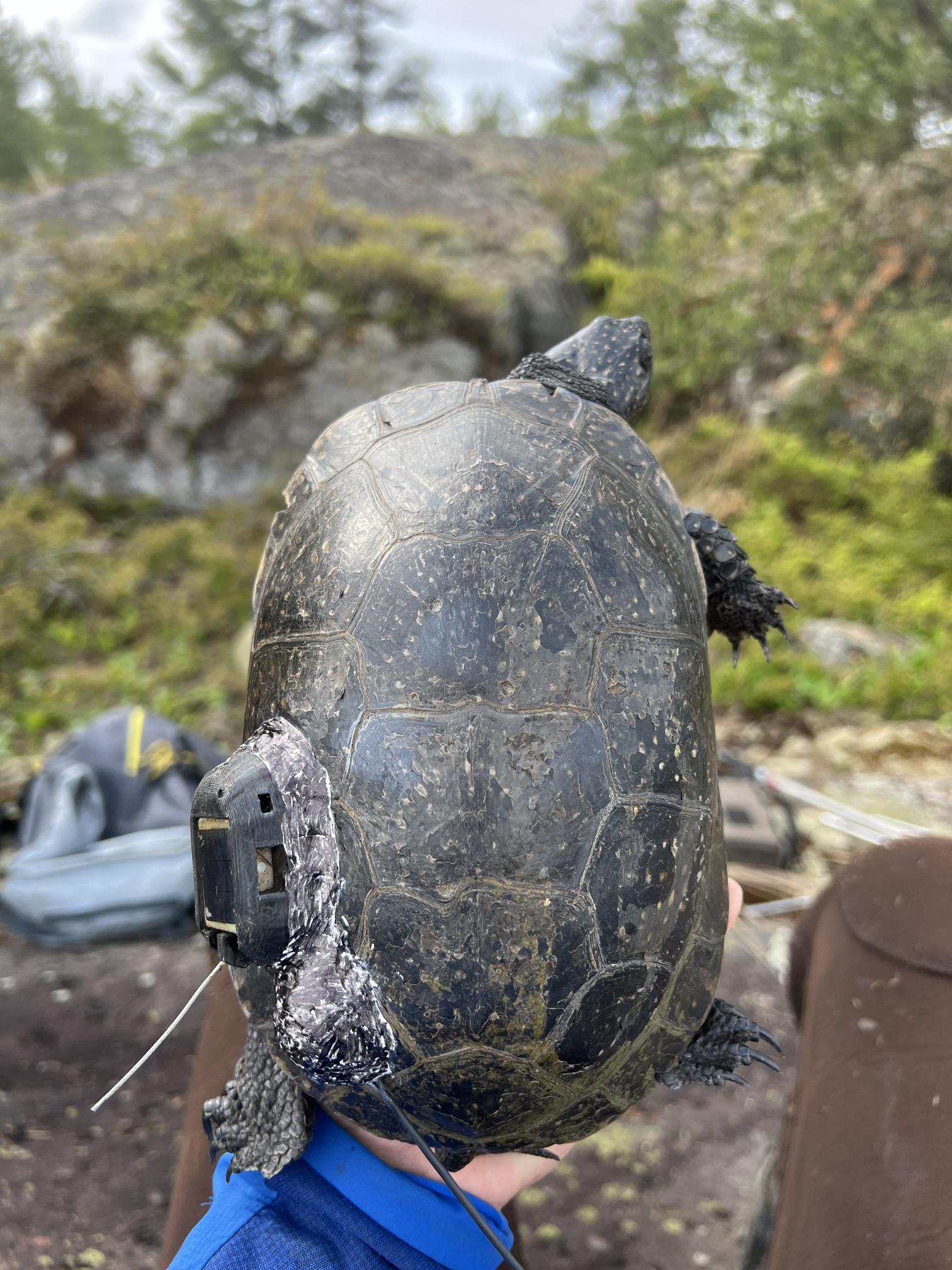
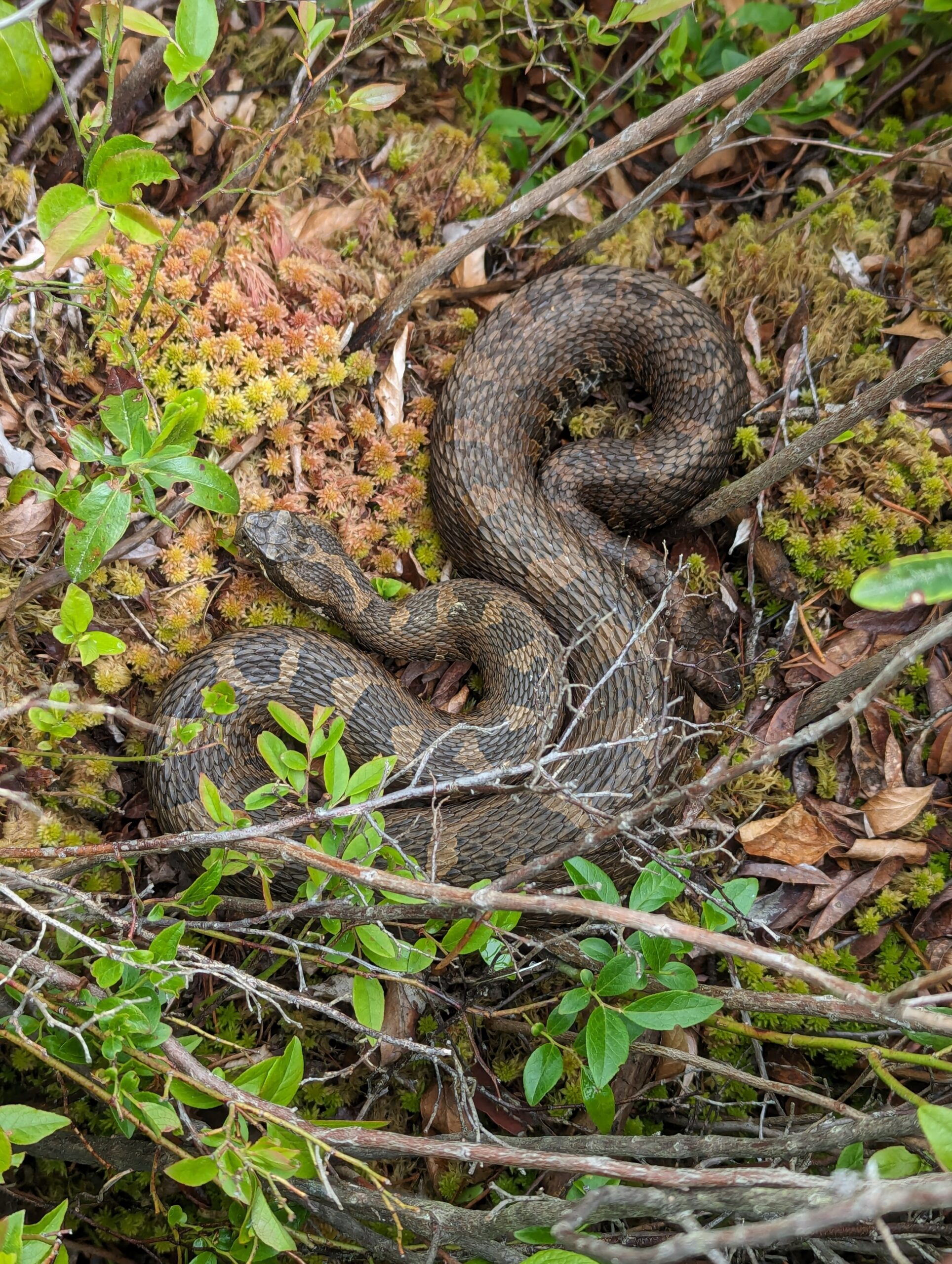
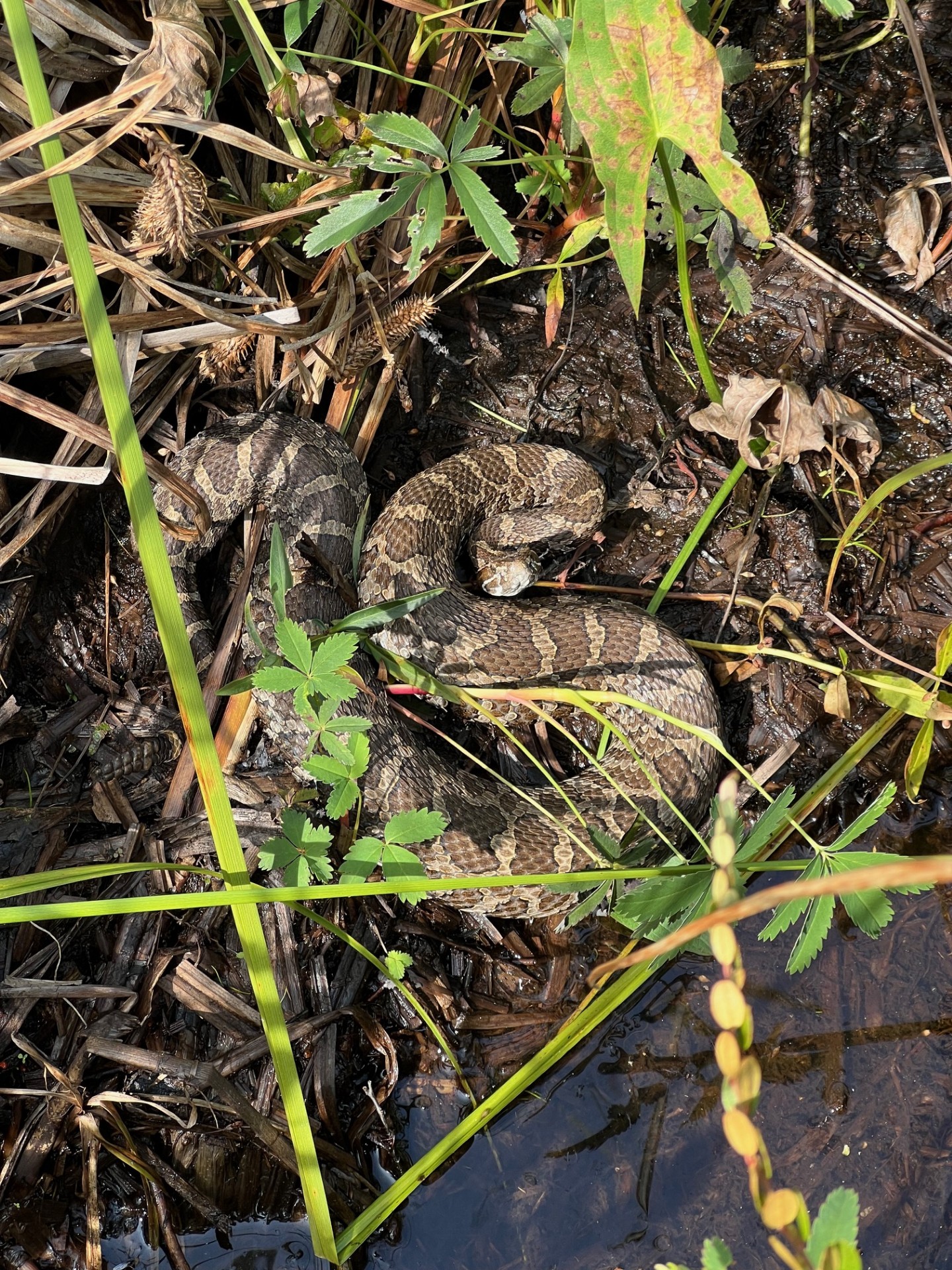
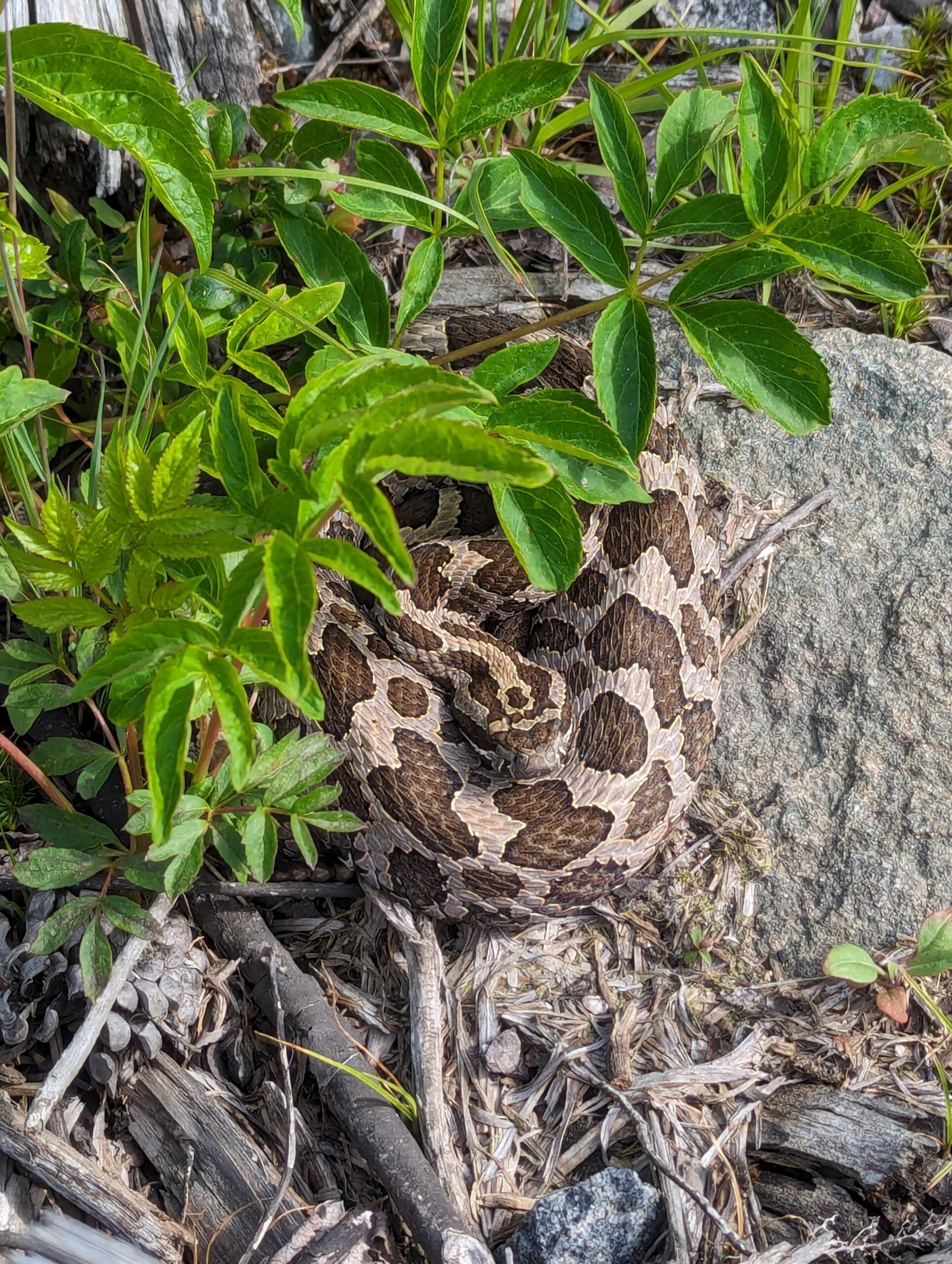
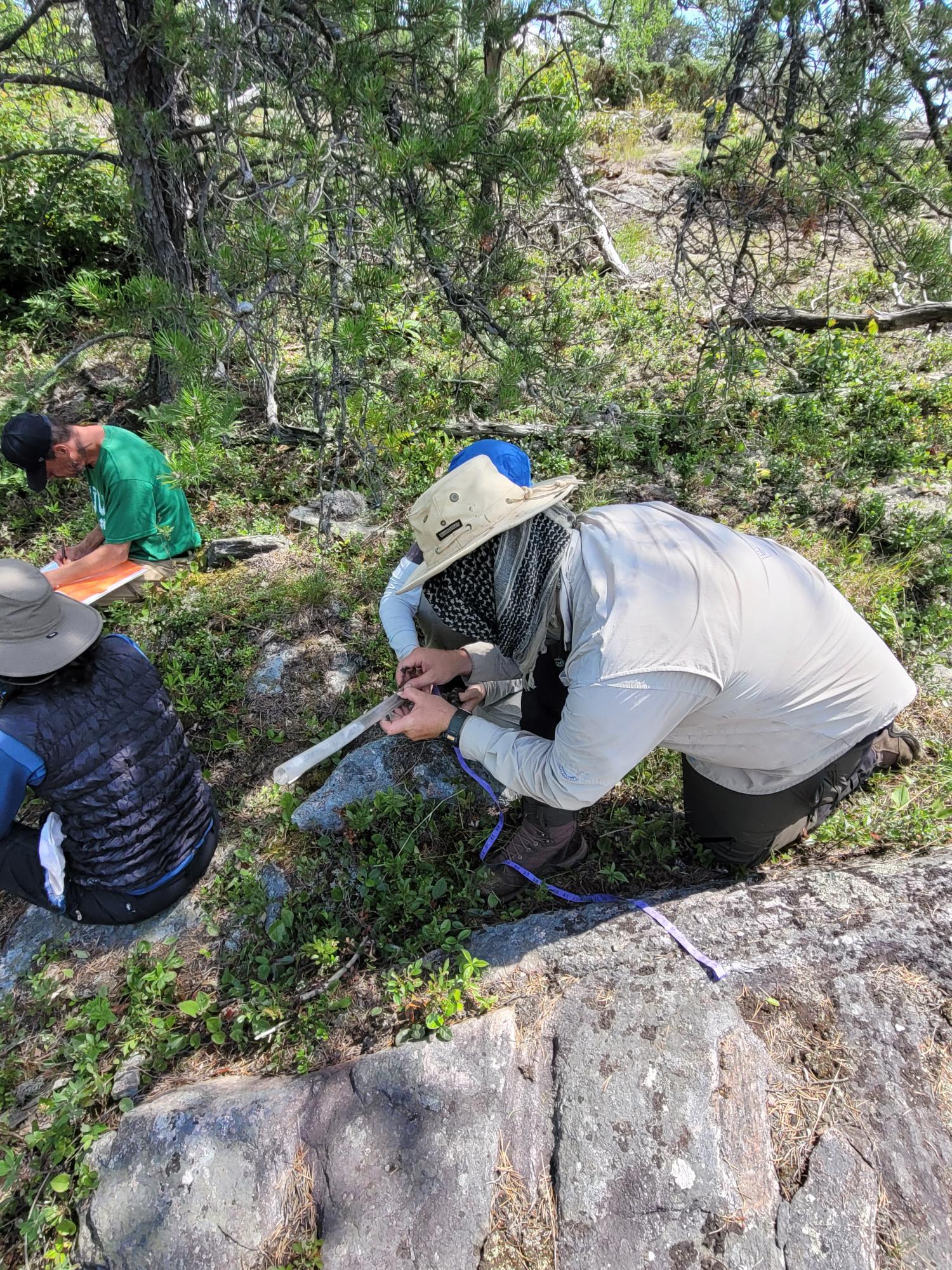
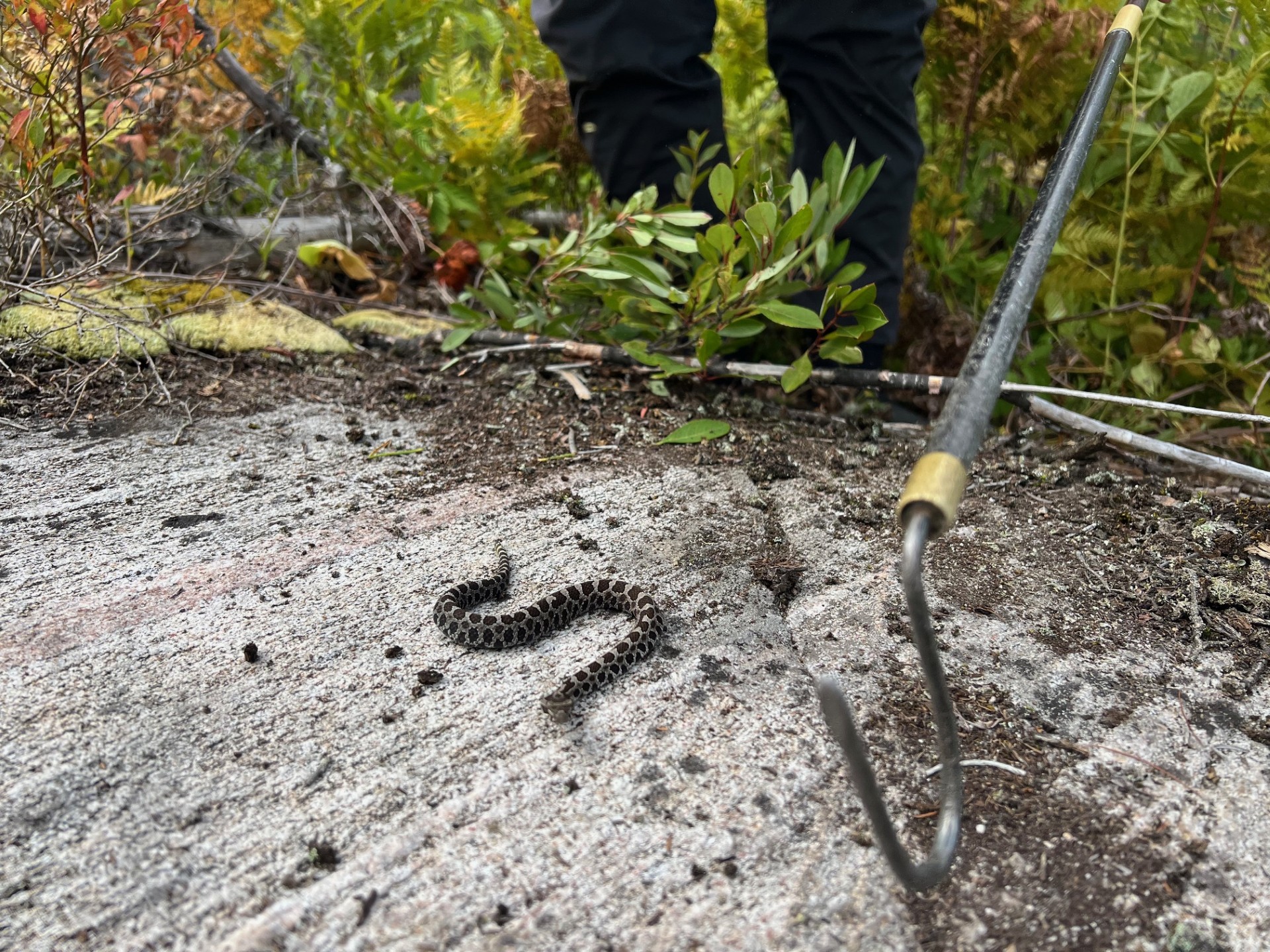
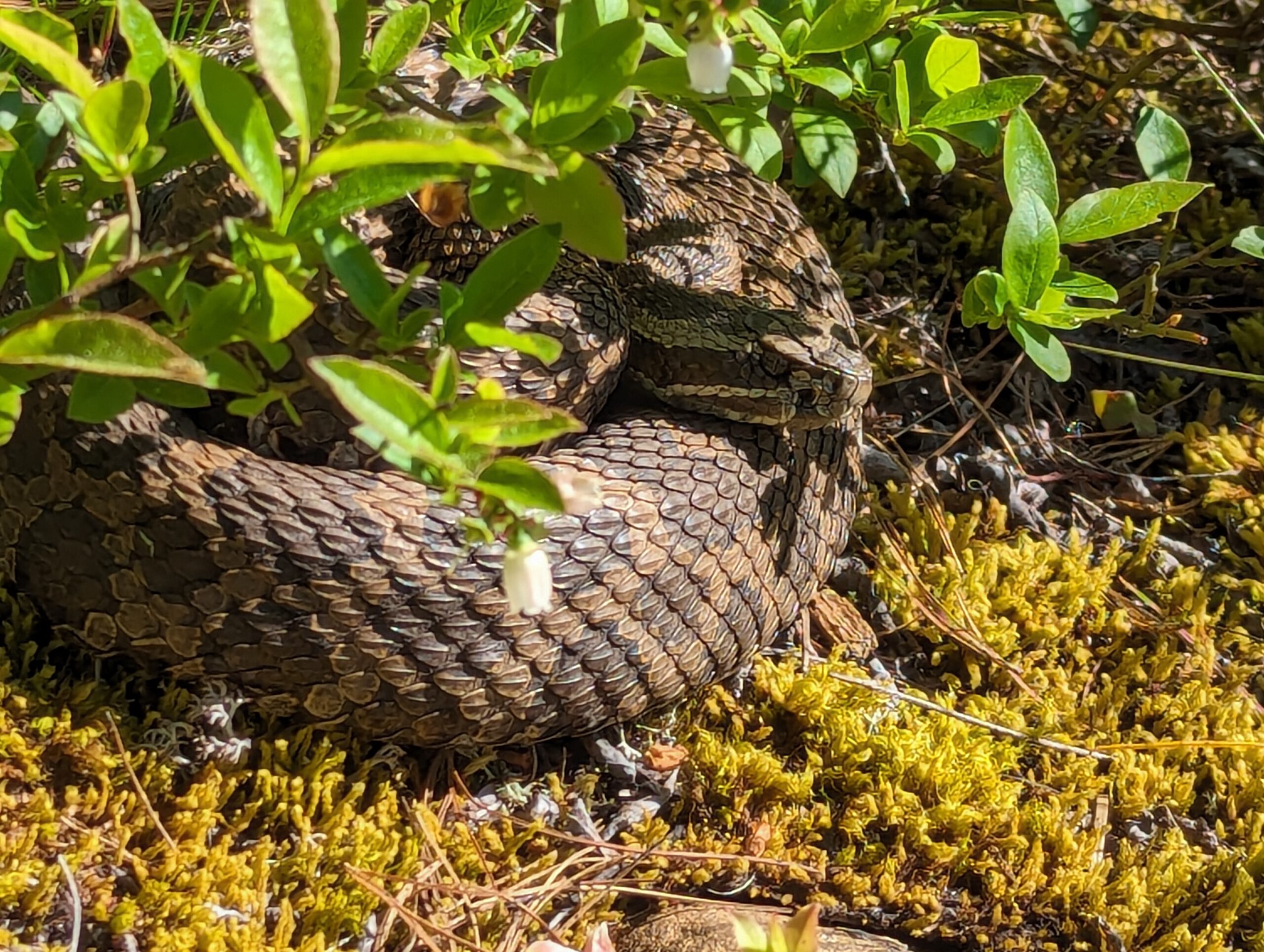
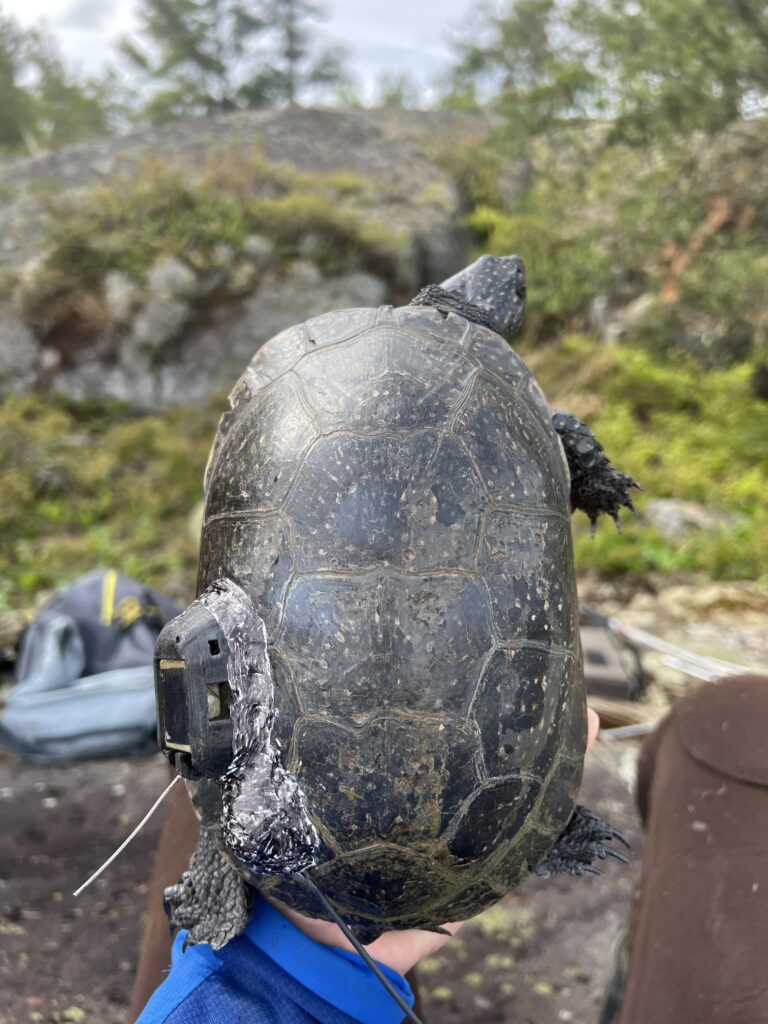
In 2025, the team carried out its seventh season of field work. Ecohydrological monitoring stations were maintained at wetland sites across the study area, recording water table levels, weather conditions, and vegetation composition to track habitat recovery and function over time. Massasauga mark-recapture surveys resumed across all treatment areas, resulting in 12 individuals captured, while turtle surveys focused on locating enough Blanding’s and Spotted Turtles to meet radio-telemetry goals; six new Blanding’s Turtles and three new Spotted Turtles were captured and tracked over the season.

Significant effort also went into assessing the effectiveness of artificial overwintering habitat created for reptiles within the wind energy centre footprint. This included a moss (Sphagnum) restoration study testing methods for re-establishing peatland groundcover on constructed wetlands, and the installation of temperature profiles at natural and constructed overwintering sites to compare thermal conditions important for reptile survival through winter.

Some planned activities were adjusted this year. Staffing challenges meant that community knowledge-gathering sessions, youth engagement events, and information-sharing presentations did not take place in 2025. As a result, the team has chosen to dedicate all of 2026 to these community-focused activities rather than field data collection. Large-scale turtle mark-recapture surveys were also postponed to prioritize other studies, and permitting limitations meant that no Massasaugas were fitted with tracking transmitters as originally planned. The team is instead developing a social media campaign aimed at reducing human-caused Massasauga mortality, shifting negative perceptions, and encouraging conservation actions.

Now in its seventh year, this program continues to generate one of the longest-running post-impact reptile monitoring datasets of its kind in Canada, informing habitat restoration and conservation strategies while strengthening HIFN’s role in leading the work on its own lands.

Further Details

For more information about the ‘Empowering Henvey Inlet First Nation Youth to Lead the Long-term Monitoring and Artificial Habitat Restoration of At-Risk Reptiles on HIFN Lands’, please visit the links below.

Blazing Star Environmental 2025 Annual Report

Blazing Star Environmental website

McMaster Ecohydrology Lab website

Laurentian University

Project Gallery